


Supply Chain Transparency for Ethical Brands
Only 12% of firms track disruptions at Tier 3 and beyond, while nearly 33% don't analyze their supply chains to identify the original source of disruption, according to a widely cited 2022 KPMG report summarized by Best Colorful Socks. For apparel, the same report found that only 19% of respondents had full visibility of all stakeholders across the entire supply chain, and just 15% had full traceability.
That gap matters to every ethical brand and nonprofit that asks customers to trust its products, mission, or impact. A shirt can support a worthy cause while still carrying unknown labor, environmental, or sourcing risks several steps upstream. Supply chain transparency turns those unknowns into questions an organization can investigate, document, and communicate.
Small organizations don't need enterprise software to begin. They need a usable supplier map, consistent records, thoughtful verification, and the discipline to distinguish what they know from what they're still working to learn.
Table of Contents
Why Supply Chain Transparency Matters Now
For mission-driven apparel brands, transparency isn't just a compliance exercise. It's the evidence behind claims about ethical sourcing, responsible production, and community benefit. Without that evidence, even sincere messaging can leave customers unable to tell the difference between a documented practice and a broad marketing promise.
The KPMG figures reveal why Tier 1 disclosure isn't enough. A Tier 1 supplier may be the factory that prints, cuts, or sews a garment. Behind that supplier could be a fabric mill, dye house, spinner, and raw-material producer, each with its own labor conditions and environmental footprint. When organizations stop their investigation at the immediate supplier, they may miss the place where a serious risk begins.
Practical rule: A supplier relationship is not the same thing as supply chain knowledge.
The problem affects oversight as well as reputation. If a brand can't identify where a material originated, it may struggle to respond when a labor concern, environmental incident, or disruption becomes public. Customers may also ask reasonable questions that a brand can't answer, such as who made the fabric, where it was dyed, or what evidence supports an ethical claim.
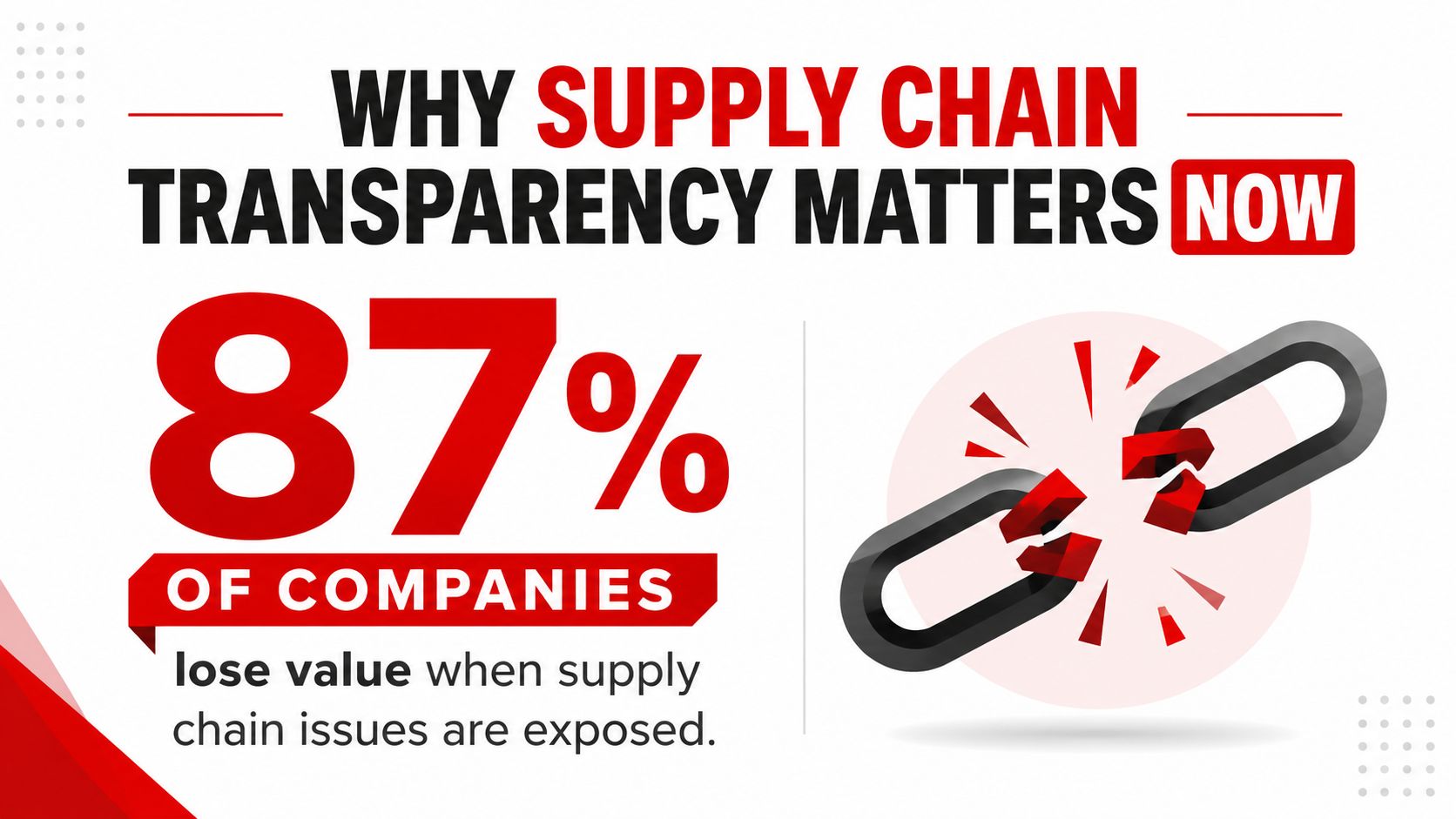
Supply chain transparency has moved from a niche ethical concern into a mainstream business priority. GEODIS' 2017 worldwide survey, cited by EcoVadis in its supply chain transparency glossary, reported that full supply-chain visibility ranked among the top three strategic priorities, although only 6% of companies had achieved it. The same source cites later survey findings in which 60% of supply-chain leaders reported Tier 1 transparency, while only 30% had visibility into Tier 2 and beyond.
That ambition-to-execution gap creates an opening for smaller organizations. A nonprofit or independent apparel label may not control a complex global network, but it can publish a clear account of its own production decisions. It can name known partners, explain what remains unverified, and update customers when information improves.
Data stewardship also matters when organizations collect supplier, worker, or partner information. Before adopting a digital platform, review its policies, including how Logivo handles your data, so transparency efforts don't create avoidable privacy risks.
What Supply Chain Transparency Means
A product's supply chain can be visualized as a family tree. The finished garment is the visible result, while its lineage extends through every material and production stage. A cotton shirt may involve cultivation, fiber processing, spinning, weaving or knitting, dyeing, cutting, sewing, printing, packaging, and distribution.
Transparency means identifying the businesses and processes in that lineage, keeping supporting records, and explaining the information clearly. It does not require claiming that every detail is already verified. A credible statement might say, “We know our cut-and-sew partner, but we are still confirming the dyeing facility.”
Three related terms describe different kinds of knowledge:
Transparency means sharing relevant information about suppliers, materials, processes, risks, and progress.
Traceability means following a particular material or product through its chain of custody.
Visibility means knowing what is happening across the network, including orders, movements, events, and supplier status.
A supplier list can improve transparency without proving that one fiber passed through every listed facility. A traceability record can follow a product's movement while revealing little about worker conditions. The systems support one another, but they answer different questions.
The EcoVadis overview of supply chain transparency describes research showing why this distinction matters. Supply-chain visibility has remained a strategic priority, while access to deeper tiers is still limited. A small brand that publishes its immediate factory information may explain one layer clearly while leaving the material's origin unknown.
For a nonprofit or mission-driven apparel brand, a proportional and honest process is more useful than an expensive promise of total visibility. Start with the product's bill of materials:
What materials are present?
Who supplied each material?
Which facilities transformed it?
What documents support those answers?
Which parts remain uncertain?
A simple spreadsheet, supplier folder, and consistent naming system can give a small organization a workable starting point. Local sourcing may also reduce the number of intermediaries and make questions easier to answer, although it does not automatically verify labor or environmental practices.
For example, the Boob Tube T-Shirt Black is described as made from 100% cotton, with the product snapshot also describing the tee as soft and durable. That confirms the stated material composition, but it does not establish the cotton's origin, every processor's identity, or labor conditions at each stage. Transparent communication separates confirmed product facts from questions that still require supplier documentation.
How Transparency Is Measured and Demonstrated
Organizations usually demonstrate supply chain transparency through a combination of traceability records, independent verification, and certifications. No single mechanism answers every question.
GS1's Global Traceability Standard defines traceability through minimum business-process requirements rather than a particular technology. Its framework combines globally unique identification, barcodes and other data carriers, eCom, and EPCIS so trading partners can align on event data across organizational boundaries. This interoperability matters because a small brand may receive information in spreadsheets, invoices, certificates, and supplier portals rather than one unified system.
A practical system can begin easily. Maintain a supplier register, connect each material to the relevant facility, store invoices and chain-of-custody records, and assign consistent names to suppliers. As the organization grows, it can adopt standardized identifiers and structured event data.
Audits add another layer. An audit may examine workplace policies, payroll records, health and safety conditions, environmental procedures, or management systems. It offers a snapshot, not a permanent guarantee. Audits can miss unreported subcontracting, falsified records, worker fear, or risks deeper in the network.
Certifications create a recognizable framework, but their scope needs careful reading. A material certification may cover fiber content or processing requirements, while a social certification may focus on worker protections or trading relationships. A business certification can assess an organization more broadly. The label only proves what its standard and audit process cover.
Mechanism | What It Proves | Best For | Limitations |
|---|---|---|---|
Supplier mapping | Identifies known businesses and production stages | Small brands beginning their program | Depends on supplier cooperation and record quality |
Traceability records | Connects materials or products to documented events and custody changes | Material origin and chain-of-custody questions | Can be incomplete if deeper-tier partners don't share data |
Independent audits | Tests selected workplace or management conditions | Focused verification of known facilities | A visit is time-bound and may not reveal every risk |
Certifications | Shows alignment with a defined external standard | Communicating verified attributes efficiently | Scope, renewal, and coverage vary |
Public disclosure | Lets stakeholders review claims and progress | Consumer trust and accountability | Disclosure alone doesn't prevent or remedy harm |
A nonprofit should choose the lightest method that answers the question responsibly, then strengthen it as capacity allows. Documentation practices used in other industries can also offer useful context. For example, organizations exploring manufacturing systems may find the discussion of rapid prototyping for aerospace and defense helpful for understanding how production records, iteration, and process control support supply-chain accountability.
Transparency should also connect to mission measurement. A social enterprise can use its supplier records alongside an impact framework such as Industry Horror's discussion of social return on investment, while keeping product traceability and social-impact measurement as distinct evidence streams.
Practical Steps to Increase Your Transparency
Small organizations can make meaningful progress by treating transparency as a staged operating practice rather than a large technology purchase. The first objective isn't perfect visibility. It's a reliable record of what the organization buys, who provides it, and which questions remain unanswered.
1. Map what you already know
Create a spreadsheet for every product or program purchase. Include the finished item, material composition, supplier name, production location, subcontractor information, available certifications, and the date each detail was last confirmed. Attach invoices, declarations, audit summaries, and relevant correspondence.
Don't wait for a perfect format. A consistent spreadsheet is more useful than an expensive platform filled with missing fields.
2. Find the important unknowns
Prioritize the parts of the chain most connected to your mission and risk profile. For apparel, that may include labor-intensive sewing, dyeing and finishing, high-risk raw materials, or subcontracted printing and fulfillment.
The deeper-tier problem remains substantial. Independent coverage reports that only 6% of companies claim full visibility beyond Tier 1, while nearly half report limited or no visibility past immediate suppliers (Sustainability Online). That finding supports a practical priority: ask suppliers to identify the next tier before trying to document every possible detail.
3. Ask suppliers specific questions
Replace broad questionnaires with requests that produce usable evidence:
Facility identity: Who makes the fabric, trims, or finished item?
Process location: Where do spinning, dyeing, cutting, sewing, printing, and packing occur?
Subcontracting: Does another facility perform any production step?
Material evidence: What documents confirm fiber content or origin?
Worker safeguards: Which policies and records address wages, safety, and grievance channels?
Give suppliers a clear reason for the request. Smaller partners may respond more readily when they understand that the goal is accurate customer communication, not automatic punishment for an incomplete record.
4. Verify and publish carefully
Compare supplier answers with purchase records, certificates, shipping documents, and audit materials. Publish the names and locations you're permitted to disclose, explain the scope of any certification, and identify gaps without dressing them up as achievements.
A transparent update can include uncertainty. “We're confirming the dye house” is more credible than implying full traceability without evidence.
For organizations that print or ship products themselves, document those stages too. Operational details can support the broader story, and guidance on printing and fulfillment can help clarify which activities belong in the map.
5. Set a review rhythm
Assign one person to maintain the records, schedule supplier check-ins, and update public information when a material or facility changes. Set goals that match available capacity, such as completing a product map, confirming a second-tier partner, or publishing a supplier-information page.
Transparency becomes meaningful when it changes purchasing decisions, supplier conversations, and public reporting. It shouldn't become a paperwork exercise that produces files nobody uses.
Industry Horror and Local Transparency in Action
Industry Horror's local model offers a useful example of how mission-driven apparel organizations can make labor impact more visible. The Ventura, California, nonprofit is a 501(c)(3) autism employment-based clothing company that provides paid job training and long-term employment for Autistic Adults through its retail shop, online store, and community programs.
Local operations don't automatically prove ethical sourcing. They do, however, make certain parts of the impact easier to observe and explain. Customers can connect the organization's retail activity with practical training in customer service, order fulfillment, printing, and workplace readiness. Staff, families, volunteers, and community partners can ask direct questions and see how the organization describes its work.
That visibility gives Industry Horror a strong foundation for transparent storytelling. The organization can separate two related but different narratives: where apparel materials and production occur, and how the nonprofit creates employment opportunities. A clear public page might identify known production partners, describe the evidence available for materials, explain what remains under review, and then document the job-training activities funded through retail operations.
Community events add another channel for accountability. Industry Horror's annual Autism Rocks Car Show and workshops connect supporters with the organization beyond a product page. Those settings allow the nonprofit to explain its employment mission, invite questions, and show how donations, purchases, volunteering, and sponsorship relate to ongoing programs.
The following video can help readers connect the physical production process with the broader questions that transparency requires:
A small organization can build trust without claiming more than it can verify. It might publish a supplier map for current products, identify local work completed by its team, explain the records used to confirm each stage, and invite community members to report questions or concerns. That approach makes transparency a conversation supported by evidence, not a polished slogan.
How Consumers Can Evaluate Transparent Brands
Consumers don't need specialist training to ask useful questions. They need to look for specific evidence, understand what a claim covers, and notice whether a brand acknowledges its limits.
Start with the product page and the organization's broader policies. A trustworthy brand should be able to explain more than the garment's aesthetic or general material composition. Look for:
Supplier information: Does the brand identify factories, mills, farms, printers, or other production partners where disclosure is possible?
Material detail: Does it explain fiber content, processing, origin, or chain-of-custody evidence?
Labor information: Does it describe workplace standards, worker protections, grievance processes, or verification?
Certification scope: Does the certification apply to the material, facility, product, or entire business?
Progress reporting: Does the brand publish updates when information changes or gaps remain?
Direct answers: Can the organization respond to a specific question without hiding behind vague ethical language?
A certification logo can be useful, but it shouldn't end the inquiry. Ask what the certification covers and whether it applies to the whole product journey. A brand may have a verified attribute at one stage while lacking visibility into other facilities.
Transparency laws deserve the same careful reading. Recent analysis of forced-labor transparency laws explains that these rules often emphasize reporting rather than preventing or remedying harm, and they don't require complete mapping down to Tier 3. In one sample, 59% of U.S. or U.K.-based companies with global supply chains held no data beyond the second tier, even though 92% believed hidden material risks likely existed deeper in the network (Global Freedom Learning Center report).
That distinction gives consumers a practical red-flag test. A compliance statement may show that a company filed a report. It doesn't necessarily show that the company found, prevented, or remedied harm.
Consumers can also compare how organizations discuss ordinary products, from apparel to a natural travel size perfume. The category changes, but the questions remain consistent: what is known, what is verified, and what is still uncertain?
For more examples of mission-led sourcing conversations, readers can review Industry Horror's perspective on ethical apparel companies, then ask brands for the records behind their claims.
Building Trust Through Ongoing Transparency
Transparency works best as a routine, not a launch campaign. Suppliers change, materials change, production arrangements change, and an old statement can become misleading if nobody reviews it. A small team can maintain trust by assigning ownership, dating each record, reviewing key suppliers periodically, and publishing corrections when necessary.
The most credible organizations pair disclosure with improvement. They don't claim perfect knowledge when they have a partial map. They explain the next question they're pursuing, the evidence they need, and how stakeholders can hold them accountable.
For nonprofits and ethical brands, that honesty can strengthen the relationship between purchase and purpose. At Industry Horror, supporters can connect retail activity with paid job training, workplace-readiness development, community events, and the proposed Autism Avenue Trade School initiative. Local supporters can participate through donations, volunteering, sponsorship, and events such as the Autism Rocks Car Show.
Consumers also have a role. Ask specific questions, reward brands that provide evidence, and give constructive feedback when an organization makes its gaps visible. Transparency grows when people use the information, not when companies publish more pages.
Industry Horror offers apparel, gifts, community programs, and paid job-training opportunities for Autistic Adults through its Ventura-based nonprofit model. Visit Industry Horror to explore its mission-driven store, learn how your purchase connects with workplace learning, and find ways to donate, volunteer, sponsor, or participate.


Comments